Reels safe zone template — download the PNG overlay (and what TikTok and Shorts actually publish)
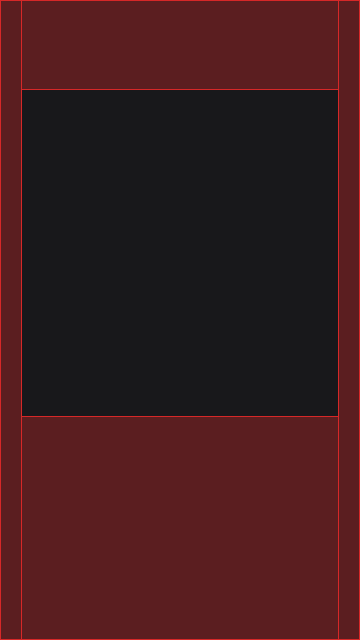
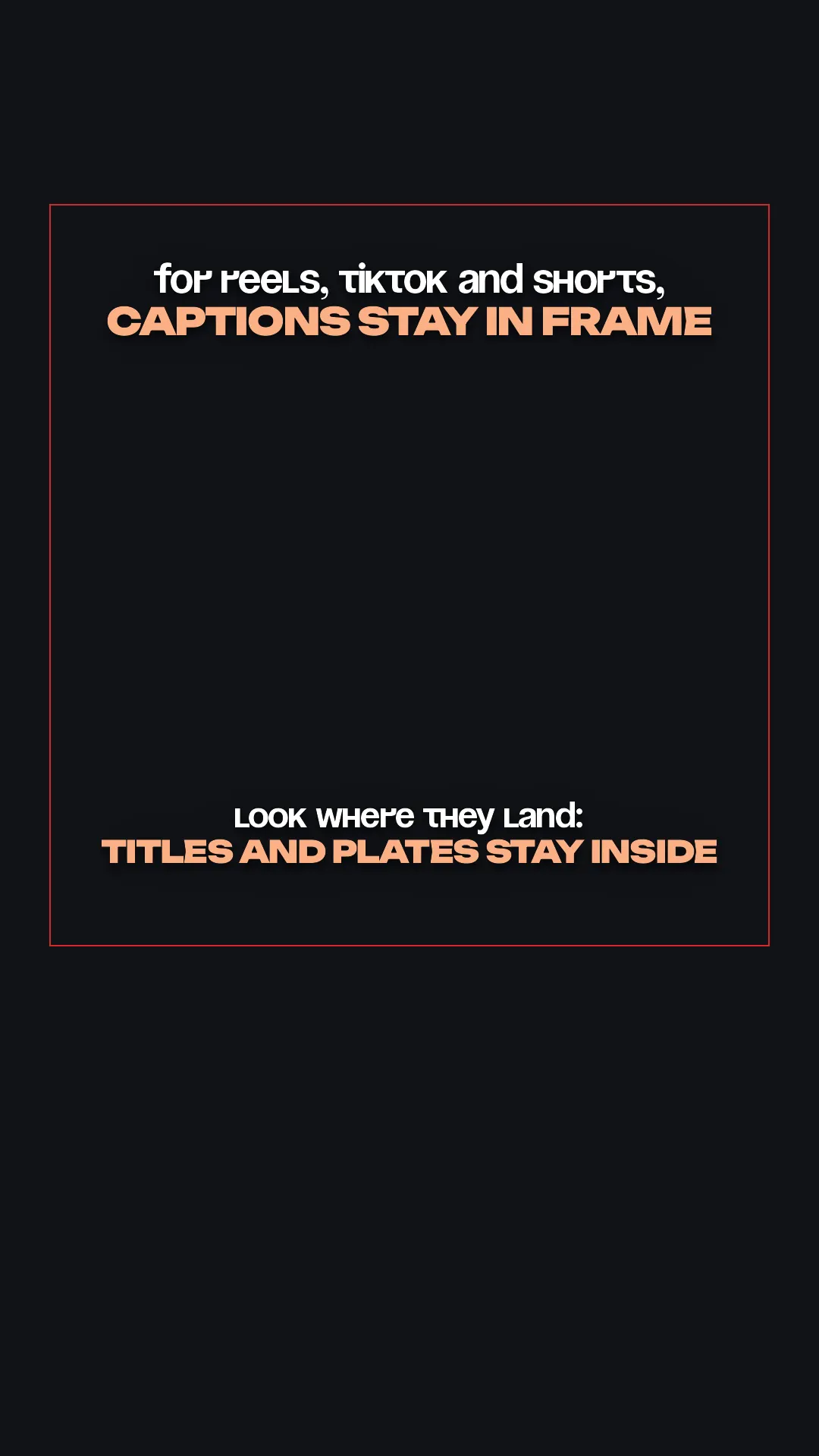
Instagram gives Reels a safe zone: roughly 14% of the top, 35% of the bottom and 6% of each side should stay free of text and logos so captions and titles are not cropped or hidden behind the profile icon and call-to-action. This page has a free PNG overlay at 1080×1920 with those margins converted to exact pixels, sourced from Meta's own ad-specs page and dated. TikTok and YouTube Shorts publish no fixed number — we explain why and link to their own downloadable templates instead of guessing one.
Download the Reels safe-zone overlay
This is a transparent PNG at 1080×1920, sized to a standard vertical Reels export. It marks the margins Meta says to keep free of text, logos and other key creative elements, converted from their published percentages into exact pixels for this canvas size — nothing here is guessed or measured off a screenshot.
Drop it onto the top track of your timeline as a guide layer, line your captions and title up inside the clear area, then hide or delete the overlay before you export. It carries geometry only — no text is baked into the file, since text rendering is not guaranteed to look identical wherever the PNG gets opened.
| Platform | Official safe-zone number | Where to get it |
|---|---|---|
| Instagram Reels | 14% top, 35% bottom, 6% each side (checked 2026-09-15) | Meta Business Help Center |
| TikTok | No official number — depends on caption length and interactive add-ons | TikTok's own downloadable template |
| YouTube Shorts | No official number — depends on ad format, campaign type and screen | Google Ads' own downloadable template |


Reels safe-zone pixels, from Meta's own numbers
Meta's ad-specs page for Instagram Reels gives the safe zone as percentages of the canvas, not pixels. The table below converts each one to pixels for a standard 1080×1920 export, rounded to the nearest whole pixel, with the source and the date we last checked it.
Meta's Instagram Story ad-specs page states the identical margin, so the pixel table below and the downloadable overlay apply to Stories placements as well, not just Reels.
| Zone | Margin | % of canvas (Meta) | Official source | Checked |
|---|---|---|---|---|
| Top (text/logo keep-out) | 269 px | 14% | Meta Business Help Center | 2026-09-15 |
| Bottom (text/logo keep-out) | 672 px | 35% | Meta Business Help Center | 2026-09-15 |
| Left side keep-out | 65 px | 6% | Meta Business Help Center | 2026-09-15 |
| Right side keep-out | 65 px | 6% | Meta Business Help Center | 2026-09-15 |
Why there's no TikTok or YouTube Shorts number here
TikTok's own ads help pages say the safe area for on-screen elements depends on the caption length and any interactive add-ons on the ad, and hand it out only as a downloadable template inside Ads Manager — never as a fixed percentage or pixel count written on the page. Publishing a number here would mean inventing one TikTok itself does not state, so we do not; use TikTok's own template instead.
YouTube's Help Center for vertical video ads points to the same kind of downloadable PNG template and says overlay placement depends on the ad format, the campaign type and the viewer's screen — again, no single number. Their own guidance is a closer source than any third-party estimate would be.
How to place the overlay in CapCut, Premiere and iMovie
CapCut: add the PNG as a new layer above your video clip, stretch it to fill the frame, then either lower its opacity while you align text or leave it at full opacity as a temporary guide — remove the layer before you export.
Premiere Pro: import the PNG, drop it on a track above your sequence, and scale it to the sequence's frame size (1080×1920 for a vertical export). Toggle the track's visibility off once your titles and captions are positioned.
iMovie: add the PNG as a picture-in-picture clip set to full screen for as long as you need it visible, place your titles underneath it, then delete the overlay clip before sharing the final video.
Titles and plates land inside the zone automatically
If you would rather not manage overlays and margins by hand on every clip, ReelsCut's own render keeps captions and titles inside the platform safe zone automatically as part of turning a raw recording into a finished short — it also shrinks a title that would otherwise run past the margin and prints a safe-zone violation mark in the render log if something still does not fit.
Frequently asked questions
Are the values the same for Reels and Stories?
Yes — Meta's Instagram Story ad-specs page states the identical margin (roughly 14% top, 35% bottom, 6% each side) as the Reels page this overlay and table are built from, so both the PNG and the pixel table apply to Stories placements too.
Why is there no TikTok or Shorts overlay here?
Because neither platform publishes a fixed safe-zone number in their help pages — TikTok ties the area to caption length and interactive add-ons, and YouTube ties it to ad format and screen size, and both hand out a downloadable template instead of a percentage or pixel count. We link to both templates above rather than invent a number.
Do TikTok zones differ for ads?
TikTok's own help pages describe the safe area for paid placements as dependent on caption length and interactive add-ons, given only as a downloadable Ads Manager template. We have not found a separate published number for organic posts, so the ad guidance is the closest official source either way.
How do I add the overlay in CapCut?
Add the PNG as a layer above your clip, stretch it to fill the 1080×1920 frame, and use it as a guide while you position captions and titles — then remove the layer before exporting. The full steps for CapCut, Premiere and iMovie are in the section above.
Will my captions be safe if I use ReelsCut?
ReelsCut places captions and titles inside the platform safe zone automatically when it renders your video: it shrinks a title that would otherwise run past the margin and prints a safe-zone violation mark in the render log if something still does not fit.